
The New Travel Mindset
If there’s one thing we can apparently agree on, it’s that we still really, really like going away.
Despite cost-of-living pressures, global uncertainty and the general feeling that everything is getting a little more expensive by the minute, travel hasn’t fallen off the agenda. If anything, we’re just getting smarter about where we spend our precious time, money and annual leave.
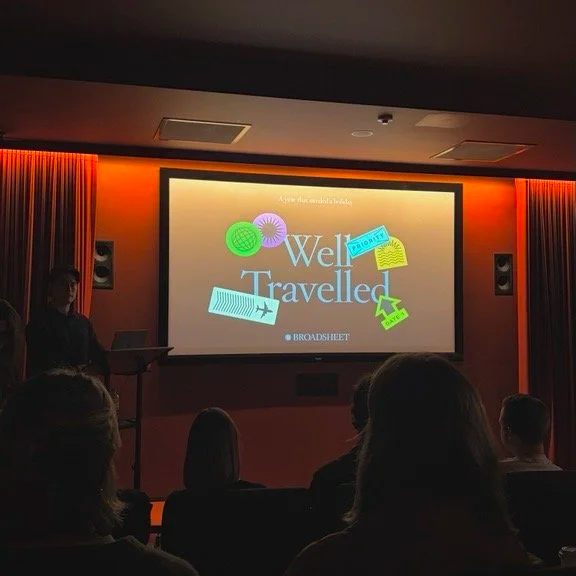
We recently joined Broadsheet for a look at how Australians are thinking about travel in 2026 and beyond, and the takeaway was pretty clear; people haven’t fallen out of love with travel, they’re simply travelling differently.
And perhaps more importantly, they’re putting more value on it.
In a survey of more than 2,000 Broadsheet readers, 84% said travel is essential to their wellbeing. For a generation that has spent the last few years navigating cost-of-living pressures, global news fatigue and an increasingly busy digital world, that says a lot.
Travel isn’t just a nice-to-have anymore. It’s the reset button.
The destination isn’t always the starting point.
The traditional travel checklist is starting to feel a little… well, traditional (even for a Type A like myself).
Today’s traveller is increasingly building a trip around something they actually care about. A restaurant they’ve been dying to try. A music festival. A tiny coastal town someone told them about. A hotel that looks so good it becomes the reason for the trip itself.
The spark comes before the destination.
And that’s important because it means travel inspiration can come from almost anywhere.
The best trip might start with a saved Instagram post, a recommendation from a friend, a Broadsheet article or a passing “we should actually go there” conversation that somehow turns into flights being booked six months later.
Travellers are looking for experiences that feel meaningful, authentic and a little less obvious. They want to come home with a good story, not just a camera roll full of the same landmark that everyone else has photographed.
AI can plan the itinerary. But can it inspire the trip?
AI is, of course, becoming a bigger part of the travel planning process.
It can build the itinerary. Find the hotel. Compare the flights. Tell you where to eat and, if you ask nicely enough, probably plan your entire weekend down to the minute.
But when it comes to deciding where we actually want to go, people still put plenty of trust in people.
Friends and family remain hugely influential, alongside trusted publishers like Broadsheet.
And perhaps that makes sense. In a world where algorithms can serve us an endless stream of recommendations, there’s something reassuring about someone saying, “Trust me, you need to go here.”
It’s not just information. It’s perspective.
For brands, the journey starts way before the booking
This is where things get particularly interesting for marketers.
The travel journey doesn’t start when someone opens a flight comparison site.
It starts much earlier.
It starts with the restaurant you save. The hotel you send to your partner. The article you read on a Tuesday night and immediately send to the group chat. The TikTok that makes you think, “Okay, now I need to go to Japan.”
By the time someone is searching for flights, they may have already been dreaming about the trip for months.
That creates a much bigger opportunity for brands to show up.
Not just at the point of purchase, but in the moments that create desire in the first place.
Because if travellers are increasingly choosing destinations based on passions, experiences, recommendations and curiosity, brands have an opportunity to become part of that inspiration, rather than waiting around for the booking window to open.
So, where to next?
The good news is that we’re clearly not done with travel. We’re just becoming more intentional about it.
We want trips that feel worth the money. Experiences that feel worth the annual leave. And places that give us something we can’t quite get from another weekend at home.
For brands, that means the opportunity isn’t simply to sell the destination.
It’s to create the spark that makes someone want to go there in the first place.
And if you’ve been waiting for a sign to book that trip you’ve been talking about for the last six months…
Consider this it.